Concrete Leveling in Warren: Follow the Water
 Otto
Three-round homeowner field game
Concrete Leveling in Warren: Follow the Water
Concrete leveling in Warren begins with observing the slab and its water route. Choose the observation that best guides the next repair decision. The game is a planning exercise, not a site diagnosis.
Round 1 of 3 · Score 0
Loading scenario…
What the game is testing
A settled slab tells you where the surface ended up. It does not tell you why the base moved. For a Warren homeowner comparing concrete leveling options, that distinction can change the repair scope. A crew may be able to raise a largely intact driveway or sidewalk panel, yet the next rain can still travel toward the same low edge if a nearby discharge route is ignored. The first round asks you to look beyond a crack and trace water from a roof outlet or higher ground to the slab edge.
Document a low panel with two photographs: one close view that shows the height change, and one wide view that includes the house, grade and water route. Add the date and whether you saw the condition after rain or during dry weather. That small record helps a contractor explain the likely source of settlement and makes later before-and-after checks more useful. It also prevents a discussion about appearance from obscuring a drainage problem near a door or foundation.
When mudjacking fits the scene
The American Concrete Institute describes slabjacking as a way to lift slabs that have shifted after settlement, erosion, flooding or shrinkage of soil beneath them. Its repair guidance also cautions that lifting does not cure underlying poor soil conditions. That is why the second round rewards a question about both lift feasibility and support. A single intact panel with a sunken corner is a different case from a slab broken into several unstable pieces. Neither condition can be judged well from a slogan or a price alone.
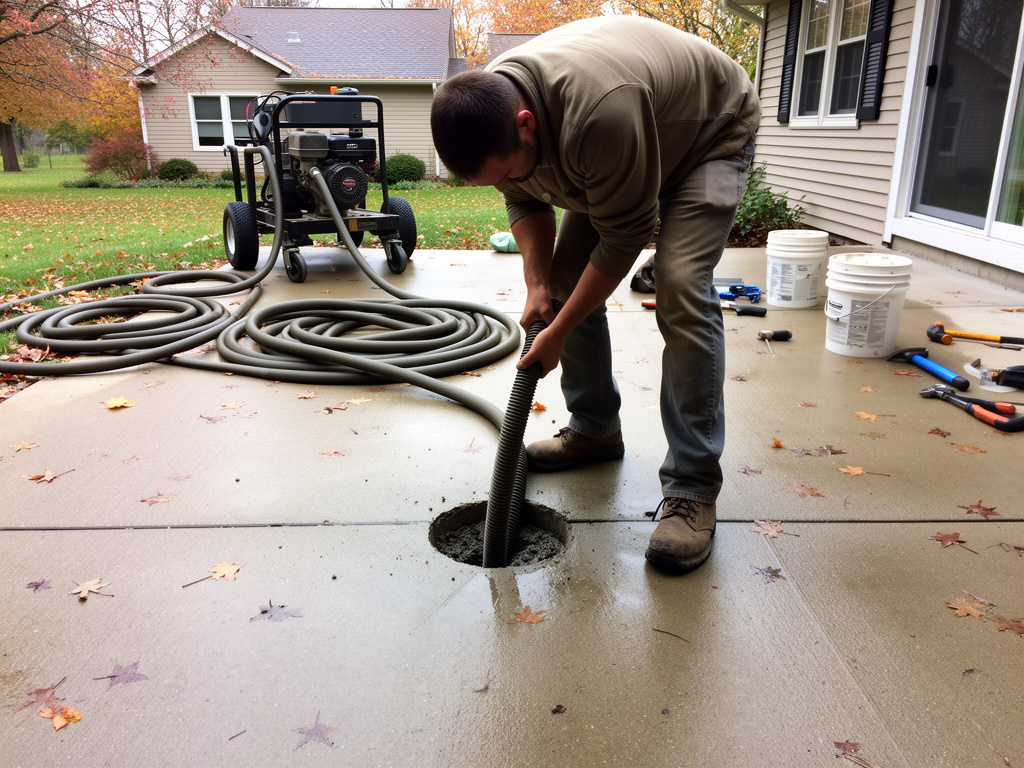
The local concrete leveling in Warren service page outlines a mudjacking process using access holes, slurry injection, controlled lifting and patching. Use that process description as a starting point for a quote conversation. Ask which panels are included, where they expect the finished edges to meet, how they will handle existing cracks, and whether the water route needs a separate correction. A clear scope should also identify any conditions that would make lifting unsuitable.
What to do after the result
The final round is a reminder that a repair choice should match the slab's condition. Multiple moving fragments, ongoing erosion or a step that continues to change can justify comparing replacement and drainage correction with lifting. Ask the provider to explain why one option fits the actual site. Do not treat a game score as a diagnosis or promise of performance.
After any repair, repeat the photographs from the same positions following a meaningful rain and again after seasonal thaw. Look for renewed pooling, widening joints and a returning lip. Michigan transportation officials noted in 2026 that trapped moisture and freeze-thaw cycling can weaken support under pavement; residential slabs need their own assessment, but seasonal observation remains useful. If the condition returns, share the dated record with the contractor. A mudjacking and concrete lifting evaluation should connect what you can see on the surface with what is happening beneath it and where water goes next.