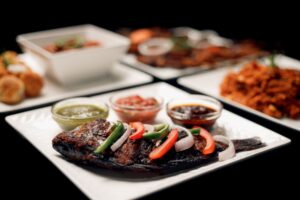
Detroit Food Photographer Five-Frame Menu Match
 Otto
Five-Frame Menu Match
A Detroit food photographer brief is a series of decisions. Play five rounds and choose the frame that gives a restaurant guest the clearest, most truthful evidence.
Round 1 of 5 | Score: 0
What the game is testing
Food photography works as both an aesthetic and an information system. A close detail may create appetite but hide portion. A wide room view may establish occasion but make the dish unreadable. A delivery image may need packaging and arrival condition rather than an idealized dining-room plate. The strongest frame depends on the decision a guest is making.
The game rewards evidence rather than spectacle. Each correct choice answers the stated question with the fewest assumptions. That principle is useful during planning because it exposes missing coverage before the shoot. If the team cannot identify a frame that shows included sides, package size, or a distinctive preparation step, the shot list has a decision gap.
Use the result to review a live menu
Open one category on the restaurant's direct-ordering page. For each item, ask whether the image shows the complete portion, supports the description, and remains recognizable at phone size. Record which question the image answers and which question remains open. The exercise is faster than a general style review because it focuses on observable evidence.
Next, compare the same item across the website, Google profile, and delivery listings. A professional Detroit food photographer can create intentional variations, but the food should remain recognizable. If different crops imply different portions or ingredients, return to the approved source frame and rebuild the exports.
Keep styling connected to normal service
Good styling controls distraction, supports freshness, and makes ingredients readable. It should not change what the guest receives. Photograph the normal portion and vessel first. Note included sides, paid add-ons, garnish, sauce level, and substitutions. Use that record when approving the final edit and when a platform asks for a new crop months later.
Color deserves the same discipline. A dish can look vivid without turning herbs electric, meat unnaturally red, or sauce into a different product. Review the image on a calibrated display and an ordinary phone. A trustworthy Detroit restaurant food photography workflow protects recognition from capture through publication.
Build a small library that can improve
Start with ten priority dishes and capture a complete menu frame, a texture detail, an ingredient cue, a context frame, a scale frame, and a flexible campaign frame for each. Label the files by item, function, ratio, date, version, and approval status. Attach the live placement so outdated images can be found when a dish changes.
After 30 days, review item views, orders, guest questions, saves, and campaign use. Do not assume the most dramatic image caused every change; note price, position, availability, and promotion. Use the evidence to plan the next focused capture. A maintained library becomes more useful each cycle because the team knows what is missing and why. Keep the next review date visible to everyone.